S3 · The Last Best West: Choosing Settlers
- Who were the Black Loyalists?
- What did 1,196 of them do in January 1792?
- Turn into the passive: “The government broke its promises.”
Answer key
- Africans, many formerly enslaved, who sided with the British during the American Revolution and came to the Maritimes.
- They sailed from Halifax to Sierra Leone and helped found Freetown.
- Its promises were broken by the government.
- analyse an official advertisement and a politician’s words
- understand how a country chose its settlers
- express preference and selection: would rather, the kind of… that
Look at the painting
Describe, then interpretCore
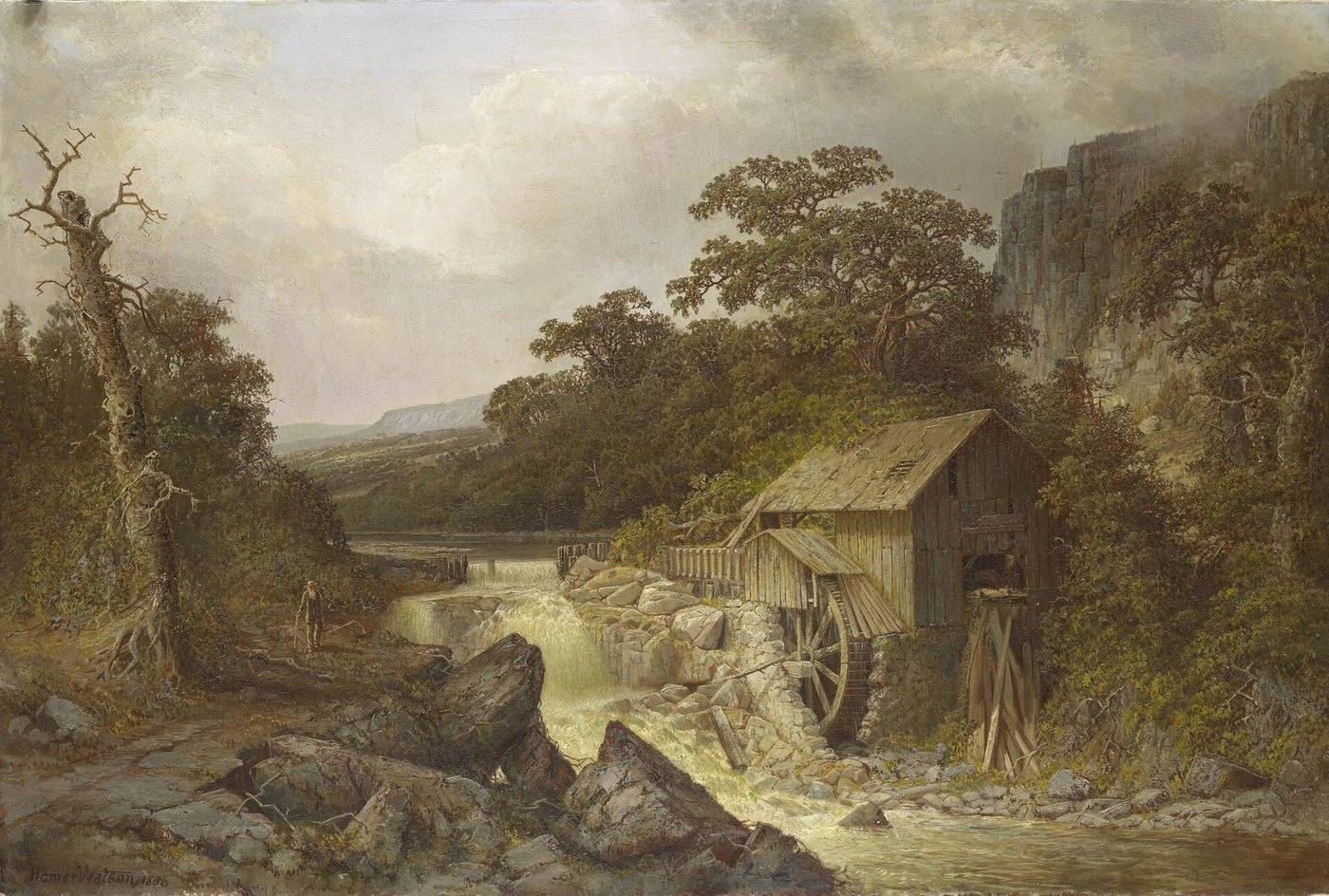
- What do you see in the centre of the painting?
- Is the mill working? Look at the details.
- What does the painting say about the life of the first settlers?
Answer key
- A wooden water mill beside a small waterfall, in a wild, rocky valley.
- No: it looks old and abandoned. The painter’s father had worked a pioneer mill, which failed in 1864 (Royal Collection Trust).
- It was hard: settlers had to clear forests and build everything; some succeeded, others failed.
In 1880, the Governor General of Canada, the Marquis of Lorne, bought this painting as a gift for Queen Victoria. It made the young Homer Watson famous.
Document 1 · An invitation
Read the advertCore
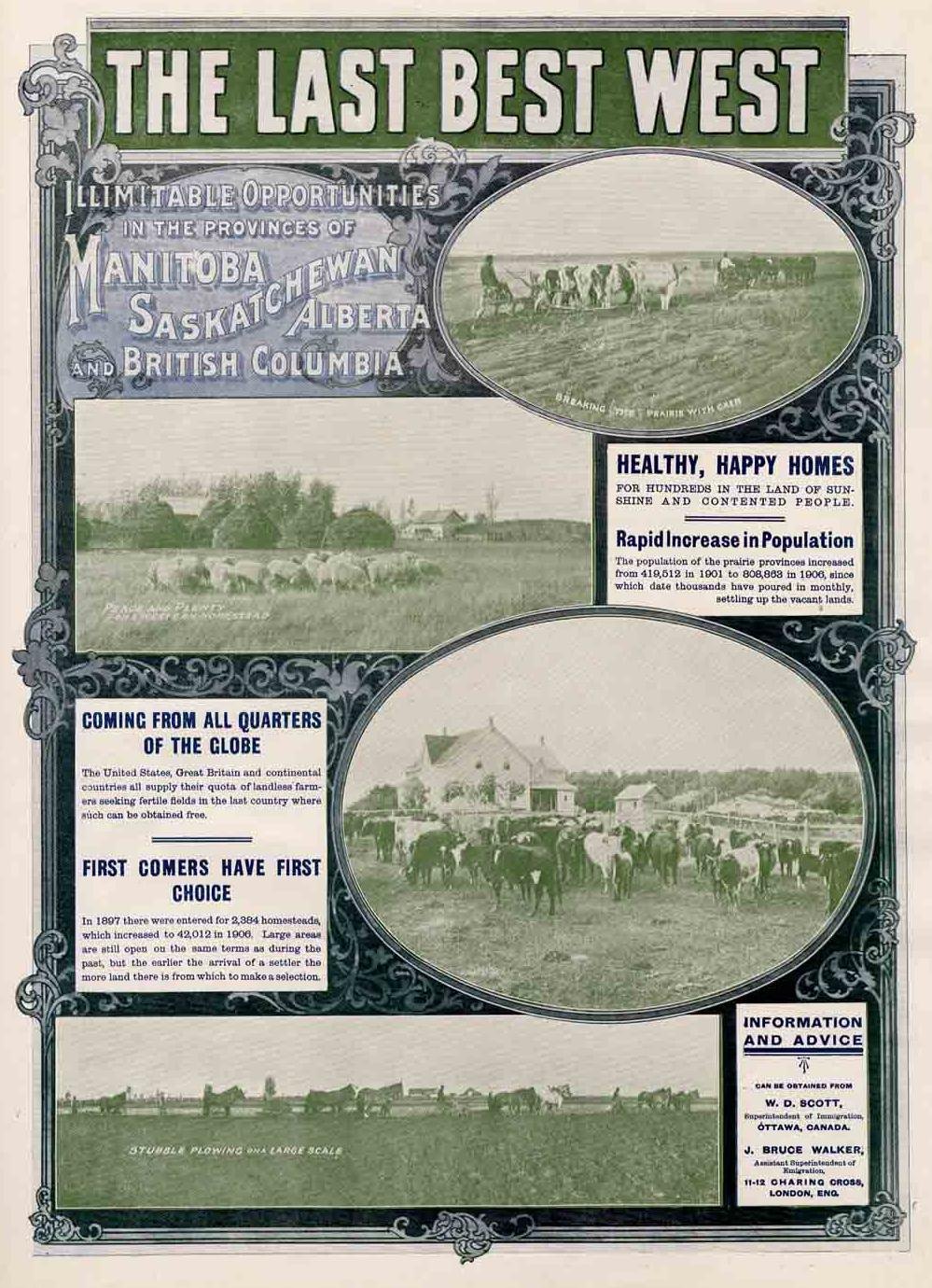
- Who published this advertisement, where and when?
- Why is it called “The Last Best West”?
- Who is it trying to attract?
Answer key
- The Government of Canada, in The Globe (Toronto), on 25 December 1907.
- It presents the Canadian Prairies as the last and best land still open to settlers in North America.
- Farmers and families ready to settle and farm the land.
Clifford Sifton was Minister of the Interior from 1896 to 1905. His programme raised immigration from around 16,000 to more than 140,000 people per year, and he looked for farm families in Central and Eastern Europe, for example Ukrainians. In 1922, he explained his choices in a magazine article.
UnderstandCore
- What does Sifton mean by “good quality”?
- Which people does he not want?
- How did his department choose the emigrants in Hamburg?
Answer key
- Strong farmers from farming families, with a wife and many children, ready to work the land.
- Escaped criminals, “wasters”, and also city workers and trade unionists who will not work on a farm.
- Booking agents picked out the farmers and peasants and sent them to Canada, and nobody else.
Critical readingStretch
Sifton speaks of “quality” and “quantity”. Who decides what “quality” is? Who is missing from his picture of the ideal newcomer? Write 100 words, using the kind of… that, would rather… than, it is striking that.
Answer key
Model: Sifton describes the kind of settler that Canada needed in his eyes: a farmer with a large family. It is striking that he judges people only on their usefulness for farming. Women appear only as “a stout wife”; city workers, and people from many parts of the world, are not in his picture at all. He would rather choose a few farmers than accept anyone who wished to come. Immigration is presented as a selection, not a welcome.
Expanding your vocabulary
| Word | Meaning | Example |
|---|---|---|
| a settler | a person who goes to live in a new, often empty region | Settlers came to farm the Prairies. |
| stalwart | strong and loyal | a stalwart peasant |
| to recruit | to look for and attract people | Sifton recruited farmers in Europe. |
| selection | the act of choosing | Immigration was a selection. |
| the Prairies | the flat farmland of western Canada | Ukrainians settled on the Prairies. |
| a homestead | land given to a settler to farm | Families built a homestead. |
Petit glossaire en français
settler : colon, pionnier · stalwart : solide, robuste · recruit : recruter · homestead : concession agricole
You are a guide at the National Gallery of Canada. In English, present The Pioneer Mill to visitors in one minute, and link it to the settlers Sifton wanted.
- Learn the vocabulary.
- Write a short advert (60 to 80 words) inviting settlers to the Prairies in 1907, then one sentence saying what the advert does not say.
- Prepare two questions you would ask Sifton in an interview.